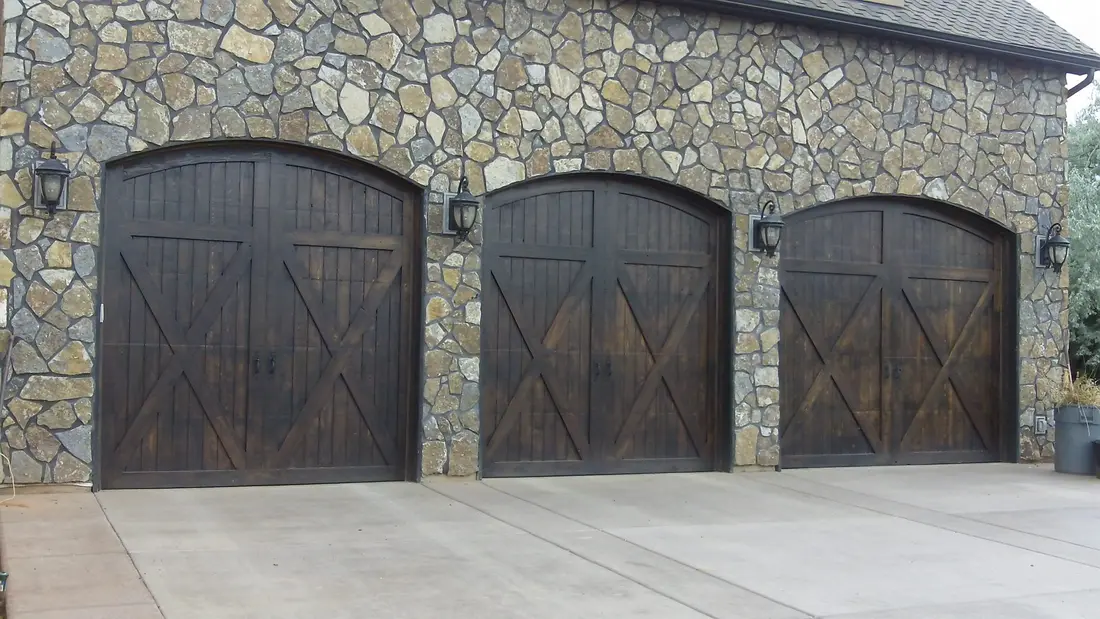
Three carriage-style garage doors set in stonework

Commercial · Grand Junction

Commercial overhead doors in Grand Junction

Your bay door is equipment. Spec it like equipment. When a commercial door stops, the cost is not the repair. It is the deliveries that cannot come in, the bay that cannot close overnight, and the staff standing around a door stuck at chest height. That is why a bay door gets specified by how hard it works and what happens when it fails, rather than by the size of the hole it fills.

Since 2006·Free estimates·Grand Junction shop

You getYou get a door, an operator, and a maintenance interval chosen around how the building actually runs — and a straight answer about what downtime would cost you.
Free estimatesOn planned work, so you see the whole number before you agree to anything.
Call or textCall if it is urgent. Text photos if it is not — either reaches the shop.

Working it out

What you are actually deciding.

You are responsible for a bay that has to keep working, and you are either replacing one, fitting out a new space, or tired of the same door failing.

What does an hour of that bay being down actually cost you?

Work it out before you compare quotes, because it is the number that decides everything else. If a stuck door means a shift standing idle or a truck turned away, the case for a heavier operator, a maintenance interval, and stocked spare parts writes itself. If it means an inconvenient walk round to another entrance, buy the cheaper door with a clear conscience.
How many cycles a day is it really doing?

Count it for a week rather than guessing — most people are out by a factor of two or more. Duty cycle is what separates a light commercial operator from an industrial one, and it is the specification most often got wrong, because everything works fine on day one. The bay that cycles eighty times a day and the bay that cycles eight need different hardware despite identical openings.

Repair the operator, or replace the whole system?

Replace when the door and the operator are both aging, when parts have gone obsolete, or when the failures are getting closer together — the repair bills are usually already telling you. Repair when the door is sound and one component has failed. Ask for the maintenance history and the parts availability, not just the quote.

How does the bay get secured when it fails after hours?

Ask this at the quote and not at eleven o'clock on a Friday night. Manual release, chain hoist, whether a partly open door can be locked down, and who on your staff is trained to do it are all decisions that cost nothing in advance and a great deal to improvise.

What the work covers

What we do for you here.

A commercial estimate should account for door size, duty cycle, operator type, controls, lift access, removal, and whether the work has to happen outside your business hours. Ours does, itemised, before anything is ordered.

  • Commercial sectional overhead doors
  • Service bay, warehouse, shop, and agricultural building doors
  • LiftMaster commercial operators, specified by duty and control type
  • Keypads, remotes, access control, safety devices, and emergency release review
  • Repair triage and scheduled maintenance for high-cycle bays

Before you spend anything

You may not need all of this.

Do not let anyone specify your bay like a large residential door. Cycle volume, staff access, and what a stuck door costs you per hour change every part of the decision, and a residential-grade operator on a commercial bay is a failure with a date on it.

  • Count the cycles for a week before you ask for a quote. It is the single most useful number you can bring.
  • Have the door size, bay count, and daily traffic ready, and say which bays are customer-facing.
  • Ask how the bay can be made secure if it fails after hours, and who on your team can do it.
  • On a tenant improvement, get it clear in writing who owns the power, the controls, and the maintenance.

What happens

How the job runs, step by step.

So you know what to expect and where you get to say no.

  1. 01

    Map how the bay is used

    What moves through it, how often it cycles, who controls it, and what happens to your operation if it is stuck open or stuck shut.

  2. 02

    Specify the door and operator as one system

    Weight, insulation, glazing, lift type, operator duty, safety devices, and access control decided together, because in service they behave as one thing.

  3. 03

    Plan the access before the work is scheduled

    Ceiling conditions, obstructions, power, lift access, and whether the work has to happen around your business hours rather than ours.

  4. 04

    Set the maintenance triggers in writing

    Balance checks, hardware wear, safety-device testing, seal condition, and the operator symptoms that mean call now — agreed before downtime forces the conversation.

What moves the price

Where your money actually goes.

  • Opening size, number of doors, insulation, glazing, wind exposure, and lift type
  • Operator duty rating, control stations, safety devices, and the state of the existing wiring
  • Cycle volume, which drives hardware grade as much as the door itself does
  • After-hours work, lift equipment, removal, disposal, and restricted access
  • Maintenance interval, and whether repeated repair has already passed the cost of replacement

Worth knowing

The things that decide whether it lasts.

  • Commercial operators are specified by duty cycle and control type. Horsepower alone tells you almost nothing about whether a unit will survive your bay.
  • Logic-controlled operators, which run the door to its limit once triggered, behave differently from constant-pressure units, and the difference matters most where staff are loading through the opening.
  • Service bays along North Avenue, the I-70 Business Loop, and the industrial corridors run high cycle counts on doors that were often specified for a quieter tenant.
  • Structural or major commercial work can raise permit questions, and Grand Junction routes those to Mesa County Building Department. Settling that before the schedule depends on the bay is worth the phone call.

Why us

Four things you can check before you call.

Everyone says they are honest and local. These are the parts of that you can verify without taking our word for any of it — and the same questions work on whoever else you are calling.

  • We specify by duty cycle, not by opening size.

    It is why the questions on this page ask what your bay costs per hour and how often it cycles before they ask how wide it is. LiftMaster publishes duty ratings for its commercial range publicly, and we link to them, so you can check a proposed operator against your own cycle count.

  • Maintenance intervals get written down rather than promised.

    Setting the triggers in writing is step four of our published process for this service. That record is also what lets a facility manager make the case for planned replacement before a shutdown makes it for them.

  • License, insurance, and electrical scope go in the estimate before commercial work starts.

    We ask you to require the license class and number, the certificate of insurance, bonding, workers-comp, and a named electrical scope from anyone quoting your commercial job. That list is published on our comparison page, and it applies to us.

  • One shop, one number, one crew — out of Grand Junction.

    Listed in the Grand Junction Chamber directory and trading here since 2006, with a Weslo Court address on the estimate, the invoice, and this page. On commercial work that decides how quickly a person reaches your bay and who you talk to when something needs fixing twice.

Three carriage-style garage doors set in stonework

Before you call

Questions we get asked most.

What should a commercial overhead door estimate include?

Door size and use case, insulation and glazing, operator duty rating, safety devices, access controls, removal, lift requirements, the schedule including any after-hours work, and the maintenance expectation. If any of those are missing, they are not free — they are just not priced yet.

How do I work out the duty cycle I need?

Count the actual opens and closes for a week rather than estimating. Most people are out by a factor of two. That number, plus the door weight, is what separates a light commercial operator from one that will still be running in five years.

Can the operator be replaced without replacing the door?

Often, yes — but only once the door is confirmed balanced and safe. A stronger operator is not a fix for a damaged, heavy, or badly moving door; it simply fails more expensively. The door gets checked first either way.

Can you work outside our business hours?

On a customer-facing or production bay it is normally the sensible way to do it, and it belongs in the quote as its own line rather than as a surprise. Tell us the constraint and it gets scheduled around.

How do I secure the bay if the door fails at night?

Ask for that walkthrough at the quote — manual release, chain hoist where fitted, whether a partly open door can be locked down, and which of your staff has been shown how. Five minutes at quote stage is worth a great deal at eleven at night.

Nearby

Towns we cover for this.

  • Grand Junction — Whatever your door is doing, we have almost certainly seen it here: custom-home faces, commercial bays that cannot be down, dead openers, snapped springs, and the ordinary replacement that has been put off for two years.
  • Palisade — Around Palisade one visit can cover a house door, a working bay, and an outbuilding — so it pays to say up front which of them you actually care about.
  • Rifle — Rifle work is best scoped before the run: commercial bays, shop doors, and repairs where we know what we are bringing.
  • Moab — Moab work plans best around your season: commercial uptime, new-build timing, vacation-home access, and maintenance booked before the visitors arrive.

Free Estimate

What can we help with?

You get a door, an operator, and a maintenance interval chosen around how the building actually runs — and a straight answer about what downtime would cost you.

1 · You2 · The door3 · Detail4 · Where5 · Send
What do you need?
What type of property?

Broken door and need someone today? Calling is faster than typing.

CallTextEstimate